Radar enclosure design is like superhero armor design. It has to be streamlined to the eye, function flawlessly, and hold off the forces of darkness (i.e., the weather). And, as a bonus, it has to keep the delicate electronics inside from getting crushed. While Iron Man armor, though, covers the red carpet, radar shelters are hidden, like above the beach, above airports, above bases, and above rolling weather stations, keeping sensitive radar parts safe from whatever life has planned.
And if you’ve ever wondered how these structures are designed in the first place, you’re not alone. Electronics enclosure design firms from the top platform Cad Crowd, with over 104,600 experts and professionals, can help you refine these radars, striking a balance between brutal environmental resistance and whisper-light signal transparency. It’s a feat of contemporary engineering. So, let’s explore the amazing world of radar enclosure design strategies.
 Table of contents
What’s a radar enclosure?
A radar enclosure, or radome, is more than a hunk of plastic that looks out of this world. It’s actually the technological cover-up specifically engineered to envelop sensitive radar equipment, and it’s got a lot more to do than sit around and pretty itself up. It’s constructed from the most advanced composite material used today, engineered with aerodynamic accuracy and internal geometries that enable radar systems to function at their best.
That’s the magic: radar equipment sends out electromagnetic waves to detect and follow objects, so the shield has to keep the gear safe from bad weather, debris, UV radiation, and even curious birds, without distorting the radar waves themselves. The material and build have to be tough enough to survive the worst the weather can dish out, like hurricane wind, and yet so thin and radar-transparent that the radar hardly knows it’s there. It’s a high-tech fortress, camouflage, and cover.
Strategy #1: Don’t block the signal – material matters
The hardest part of radar enclosure design for engineering design firms is that the material needs to effectively act as if it weren’t there. Consider it the same as designing a window for radio waves—you would have the radar to see through the enclosure, as well as it would see through unconfined space.
Low-loss dielectrics are the first choice. These could be composite resins or specially formulated plastics that enable radar waves to pass through with near or no signal loss. Fiberglass-epoxy, PTFE composites, and tuned thermoplastics are all contenders on the short list. The buzzword in this case is transparency to RF (radio frequency).
But it’s not just a case of selecting the right material. Material thickness, resin weight, and fiberglass fiber weave each have some influence on signal performance. Electronics enclosure design firms typically perform sophisticated simulation and field testing to fine-tune just the right combination.
Strategy #2: It’s a war out there – weather resistance
Imagine a radar sitting atop the Swiss Alps. Imagine the same radar used in a tropical rainforest in Southeast Asia. Two environments with one problem in common: the enclosure must be able to withstand the most challenging climates while maintaining the highest levels of performance.
Electronics enclosures are attained by radio frequency engineering and design firms through multi-layer composite walls, UV-stabilized finishes, and hydrophobic surfaces. They can also be equipped with integrated heaters to avoid snow or ice buildup. In deserts? Sand-resistant finishes and thermal expansion joints to avoid extreme heat.
Resistance to corrosion is also a consideration. That is why certain radar enclosures shun exposed metal unless it is treated aluminum or stainless steel. The enclosure could be an empty dome or box, but beneath the exterior, a fortress.
Strategy #3: Special shapes for special purposes
Radar equipment is special, and so are the enclosures. There are geodesic domes, bullet-shaped casings, cube sanctuaries, and low-profile cases, each tailored to a particular operational need.
- Radar air traffic control is required for wide, high-altitude coverage, which is why their enclosures look like big golf balls.
- Coastal and marine radars require weather- and corrosion-resistant constructions with minimal wind resistance.
- Military radar systems? These require camouflaged, modular enclosures deployed in an instant and concealed in an instant.
Form follows function. Enclosure design companies frequently employ 3D CAD modeling design services and simulation software to define enclosure forms to the optimal point. Even minor variations in the curvature of domes can optimize signal performance or minimize wind drag.
Strategy #4: Keep it cool – thermal management
Within that protected housing, radar electronics may become very hot. To the extent of a great deal of heat, indeed, from high-frequency transmissions, processors, and power amps. And unless managed to some degree, it can all cause failure.
Enter: thermal management design.
Which typically consists of:
- Passive ventilation systems with air baffles to restrict airflow and heat sinks to dissipate heat.
- Active cooling, such as integrated fans or HVAC systems.
- Intelligent layout strategies that position heat-generating components away from critical sensors.
A few enclosure designers take it a step further by incorporating phase-change materials (PCMs), which release and absorb heat slowly, or thermoelectric cooling modules. It’s literally air conditioning the circuit, but in a cool enclosure.
Strategy #5: Security and shielding
Don’t forget about the human element. Radar enclosures often hold very sensitive or classified tech, so they require physical protection and electromagnetic shielding.
In government or military systems, enclosure design companies may:
- Employ Faraday cages to guard against external interference (or internal emissions from escaping).
- Employ anti-tamper features, CCTV, or biometric authentication.
- Employ ruggedized lock doors and tamper-evident lids.
Even civilian radar equipment made through electronics design services (i.e., for predicting the weather or tracking sea) can include lightning protection, grounding, and EMP shielding integrated for worst-case use. You wouldn’t mind that bolt out of the blue burning up your radar system—or at worst, having some jerk slip in there and blow it up.
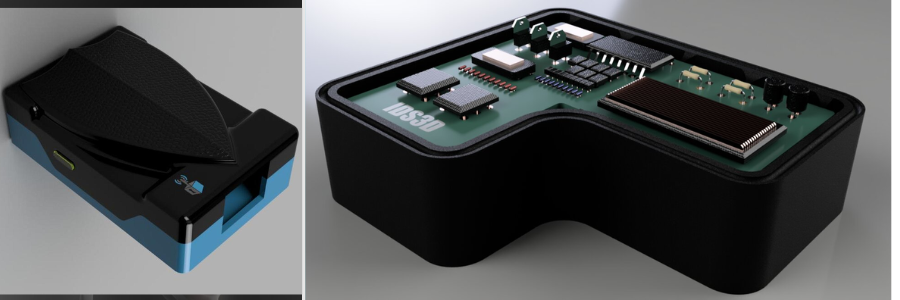
Strategy #6: Portability and modularity
Why do radar systems have to be stationary installations?
Increasingly, radar is being placed on wheels—on trucks, ships, or deployable tents that can be deployed in haste. These applications require enclosures that are light, transportable, and easy to install quickly.
Mobility design typically entails:
- Panelized construction optimization, where walls bolt or latch together.
- The addition of lift eyes, forklift pockets, or tow hooks.
- Staging the enclosure to be stackable or collapsible for shipping.
Some electronics enclosure design experts even offer specialized deployment kits, whereby an entire radar shelter can be set up in less than an hour in any environmental condition, including rain or shine, desert or tundra.
Strategy #7: Seismic, shock, and vibration safety
Radar equipment is fragile, such as your new, high-quality espresso machine that shatters if you bump it too hard. Therefore, when designing enclosures, cushioning and isolating the contents inside is a requirement.
Enclosure design firms usually:
- Shock mounts mount to cancel out vibrations.
- Under seismic bracing or shock-resistant subframes.
- Foam-lined or elastomer-dampened walls in sensitive electronics bays.
If your radar is headed toward a ship, train, or airplane, these types of problems are twice as significant. Otherwise, one pothole—or wave—would shake your whole system into an expensive paperweight.
Strategy #8: Maintenance ease
Radar systems must be inspected periodically. Therefore, freelance engineering design experts take maintainability into consideration when designing the enclosure.
This includes:
- Weather-sealed doors or panels that can be accessed.
- Embedded platforms, ladders, or retractable.
- Diagnosis-friendly wiring paths and easily identifiable components.
Smart enclosures may even provide remote condition monitoring and diagnostics, so technicians can track performance without even stepping on-site. It’s telemedicine for your radar.
Bonus strategy: The camouflage art of invisibility
This is radar stealth nuts. In some military or surveillance uses, radar enclosures need to be camouflaged. These introduce camouflage coatings, low-profile shapes, and visual illusions.
Some enclosures are camouflaged to resemble:
- Ordinary utility sheds
- Huge boulders
- Roof-top air conditioners
In a city, radar systems can be hidden in building features, such as church steeples or water towers. It’s hi-tech hide-and-seek, and enclosure designers are the game masters.
Collaboration: Why enclosure design companies are indispensable
Radar equipment is very high-tech equipment with literally tons of moving parts—literally, as well as conceptually. And that is precisely why engineering design experts prefer to work with enclosure design companies. These guys aren’t just assembling boxes; they’re assembling a serious package of material science skills, mechanical engineering services, thermodynamics, and RF transparency. That is, they know how to house your radar without throwing a wrench into its signal.
It’s far more than technical competence. They’re familiar with regulatory standards as well as MIL-STD-810 for military, for example, or IEC approvals for commercial equipment. They’re familiar with using environmental testing and weathering the difficulties of rough real-world use.
When you’re not only bringing on board a company with decades of history in enclosure design but setting the stage for success tomorrow, whatever location you’re deploying your radar system to, that’s what the right partnership is all about.
Conclusion: Putting it all together
Radar enclosure design is not a cookie-cutter exercise in electronics device engineering. It’s an equilibrated mixture of art and science tied together in fiberglass, resin, and weather-resistant coatings.
From shape, material, to thermal control and security, each detail plays a role in performance. When you have the right electronics enclosure design company at your side? You’re not just protecting your radar, you’re amplifying its potential.
How Cad Crowd can help?
The next time you catch sight of a dome-crowned tower or look up to see a radar dish perched on the hilltop, remember: there’s an entirely different world of strategy behind those appearances. It’s more complex and smarter than it seems. Cad Crowd is the best platform to find freelance engineering, architectural, and product design for the most unique projects.
Don’t miss out on the opportunity to elevate your understanding—contact Cad Crowd for a personalized, no-obligation quote today!
The post Design Strategies for Radar Enclosures with Electronics Enclosure Design Companies first appeared on Cad Crowd.